How to start an alterations business, from someone who runs one
If you can sew a clean hem and fit a bodice, you can start an alterations business. Plenty of us did it from a spare room with one good machine and a steam iron.
The sewing is the part you already know. What catches new seamstresses out is everything around it: pricing, bookings, saying no, and the slow months. This guide covers the steps we'd want someone to tell us on day one, with a lean towards bridal, because that's where we work.
1. Decide what kind of alterations you'll do
General alterations like jeans and zips bring steady, quick work. Bridal brings bigger jobs with a lot more pressure. Many seamstresses do both and slowly shift towards whichever they enjoy more.
If you're aiming for bridal, be honest about where your skills sit. Can you take in a boned bodice through the zip, or lift and reset a lace edge on a hem? If not yet, take general work while you practise on thrifted gowns. A bride's dress is not the place to learn.
2. Get the paperwork sorted
In Australia, the basics for a sole trader look like this:
- An ABN. Free to apply for through the Australian Business Register.
- A business name, registered with ASIC if you're trading under anything other than your own name.
- Public liability insurance. Brides and their mums will be in your space, standing on fitting boxes, tripping over steamer cords.
- Something to cover customer property. You'll be holding garments worth thousands. Ask your insurer specifically about goods in your care.
- A client contract. Put your terms in writing before you touch a bride's dress: deposits, what's included, rush fees and what happens if she cancels. Our contract wording for bridal seamstresses is coming soon.
- Council rules for home businesses. Most councils are relaxed about a home sewing studio, but check, especially if clients will park on your street.
You'll only need to register for GST once you expect to turn over $75,000 a year, though you can register earlier. business.gov.au has a good checklist for home-based businesses. This isn't legal or tax advice, so run your setup past an accountant if you're unsure.
3. Set up your space
You don't need a shopfront. You do need:
- A clean, private fitting area with a full-length mirror and a fitting box or step
- Somewhere to hang gowns where they won't crush or pick up pet hair
- A good steam iron and a pressing surface big enough for a skirt panel
- Good light, because matching ivory thread to ivory lace under a warm globe is a trap
For bridal, add a garment rack with covered bags and a system for tagging every dress. You'll have twenty gowns hanging in peak season, and several will be white.
4. Work out your prices before your first client
This is the step people skip, and it's the one that decides whether the business works.
Don't copy the shop down the road. Work out an hourly rate from what you want to earn plus what the business costs, then divide by the hours you'll actually bill. We walk through the full calculation in how much to charge for alterations. The short answer for most Australian seamstresses lands somewhere between $110 and $180 an hour once you're honest about unbilled time. When it's timed accurately, only about half your studio time is actual sewing.
Then turn that rate into job prices using real times. If you don't have your own yet, our free Pricing Calculator gets you a starting rate, and the Bridal Alterations Time Guide gives you benchmark times to price from until you've timed your own.
5. Time everything from day one
Every job you do in your first year is data. Time it. Not just the sewing, but the pressing and hand finishing too.
After a few months you'll know your real times for the jobs you do most, and you can tighten your prices with confidence. Our bridal sewing stopwatch is free and records each job by stage, so you can see exactly which part runs long.
6. Plan your bridal season
Bridal alterations are seasonal, but not in the way most people expect. In much of Australia the popular wedding months are April and September to November. Fittings start well before the wedding, so for a bridal studio the busy stretch is really July to November, with another crunch in March for the April brides. December to February tends to be quieter.
Two things help:
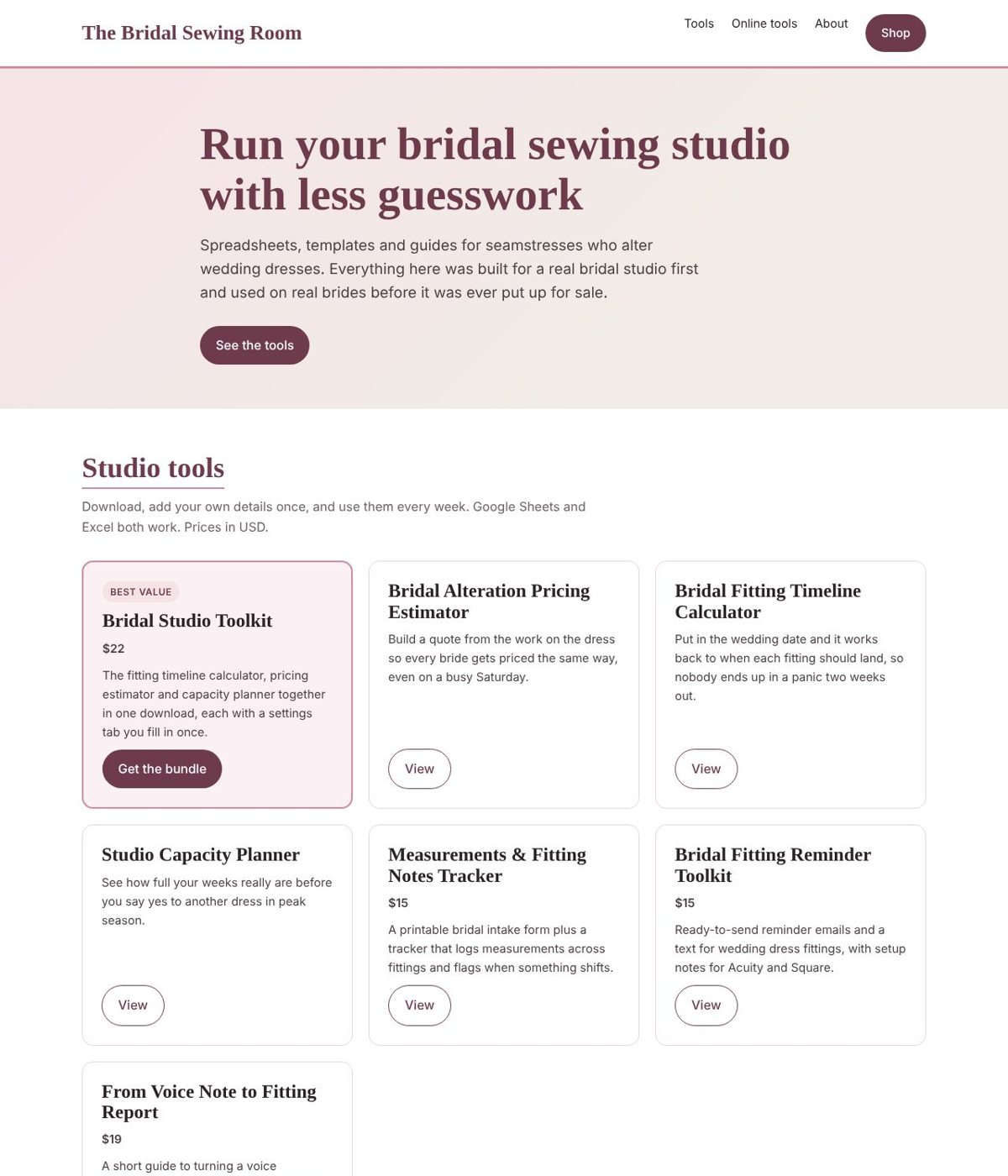
Cap how many gowns you take on. Work out how many bridal hours you have per week, then how many dresses that really means. Booking more brides than you can sew is how quality slips. The Studio Capacity Planner does this maths for you, and we're building a fuller capacity tool now.
Pre-book your brides. Get them booked in for all their fittings as soon as they have the dress, even if the first one is months away. You'll see your season filling up before it arrives, and brides love knowing they're locked in.
Fill the quiet months. Formal season, bridesmaids, general alterations and repairs all help smooth the year.
7. Get booking and fittings organised
Most bridal dresses need two or three fittings, ideally starting six to eight weeks before the wedding. Bigger overhauls usually need two to four extra fittings in between, spread out over a few months. Brides who fall pregnant before the wedding need their fittings planned around a changing shape too. Keep a record for each bride: measurements, what was pinned, what's agreed, and the dates. Brides will message you at 11pm asking "what did we decide about the bustle?", and you want the answer in one place.
Online booking saves a surprising amount of back and forth. So does a reminder system, because a bride who forgets her shoes at the hem fitting costs you an appointment. No-shows cost even more. Clear booking wording in Acuity or Square, with a deposit and a cancellation rule, cuts them right down. Our Bridal Fitting Reminder Toolkit has the messages ready to send. The Bridal Fitting Timeline Calculator works out fitting dates back from the wedding.
For notes, the Measurements and Fitting Notes tracker keeps each bride's details in one place. If you'd rather talk than type, From Voice Note to Fitting Report turns a quick voice memo after the fitting into tidy notes.
8. Find your first brides
Word of mouth will be your biggest source eventually, but it takes time to build. While it does:
- Get listed where brides look. Bridal Seamstress is a national directory of seamstresses who do bridal work. Listings are free.
- Set up a Google Business Profile and ask every happy bride for a review.
- Introduce yourself to bridal shops that don't do alterations in house. Many need someone to refer to.
- Post before and afters. Brides want proof you can handle a dress like theirs.
- Post on Facebook at least once a week. That's the absolute minimum. Regular posts show brides you're active and still taking work, and nothing builds trust faster.
9. Learn to say no
You'll be offered jobs you shouldn't take: a full restyle in ten days, or a dress two sizes too small with no seam allowance to let out. A polite no protects your reputation and your weekends.
The bit nobody tells you
Starting an alterations business is easy. Running one that pays you properly takes a few deliberate decisions about pricing and capacity. Get those right early and the sewing takes care of itself.
When you're ready to set your prices, start with how much to charge for alterations, then the seamstress pricing guide.
Tools built for seamstresses, not brides
Most alterations websites are written for brides. The Bridal Sewing Room is different. Every product we make is for seamstresses, to help you build a bridal business that pays you properly, and each one is built and used inside a working bridal studio.
More are on the way, including contract wording for your bridal clients. Follow The Bridal Sewing Room on Gumroad and you'll hear when each new one comes out.
Further reading: - Home-based businesses (business.gov.au) - Key legal considerations for a tailoring business (Sprintlaw)
Price your work properly
Tools made inside a working bridal studio, from a free hourly rate calculator to a ready-made price sheet.
Browse the shop